How to Beat Artist's Block

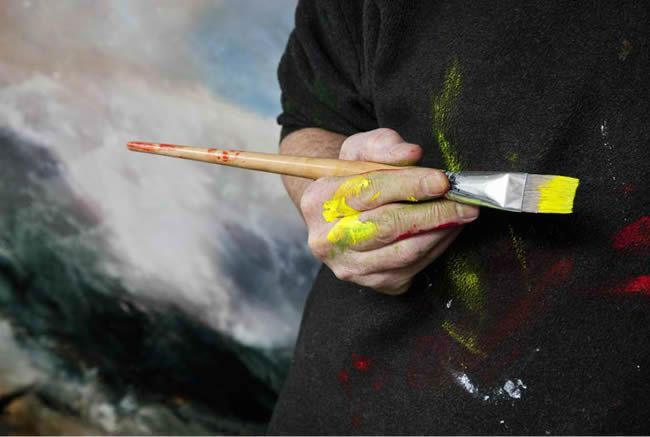
It’s a devastating thing for an artist to feel they’ve lost their inspiration, to encounter a creative block. But suffering from artist’s block doesn’t mean you’ve lost your artistic ability and it can be overcome. Dr. Janet Montgomery has some tips to help beat artist’s block.
It's the fear of not being able to do it that is making you feel you've lost your inspiration. To get rid of the fear, you must approach your painting as if it were a job and DO IT.
Force yourself to set a goal of ‘X’ number of paintings. Copy if you must use kitchen tools as models if you must, but simply getting into the paint itself will begin to inspire you, even if you don't like the subject matter. There's always something to learn.
Change media. If acrylic, go to oil. If oil, go to printmaking.
Search for new painters on the web, using Google's image search. Go to galleries. Try to find an artist who's doing something that appeals to you, something that the voice inside you says, "I could do that" or "I'd like to be able to do that." Secure an image and copy it to find out what that artist did and how. Then think about recombining ideas.
Play the "what if?" game. What if you painted this old subject matter on a tire? What if you put together a still life of bricks? How can you use a new material, a new subject matter, a new style? Be wild in your considerations.
Remember that everyone has fallow periods. Don't consider them really fallow, just the subconscious taking a breather and getting ready to take a different direction.
Check out some books on creative thinking to give you a jolt.
Take a trip to somewhere you've never considered, even if it's only to a local town you've never explored. Always take a sketchbook, everywhere you go. Or a digital camera. Imagine yourself a Lilliput or a giant to change your perspective.
Keep a journal of drawings and writings for a month. Pick something from the journal to paint. Review it in six months or a year.
Compile a scrapbook of family portraits — not just faces, but each family member doing something typical — a ‘candid’ sketch with writing about the person, the time, your impressions. Keep it in a journal for your kids' kids.
Go to a senior citizen center and draw the people there. Talk to them about their life stories. Try to express your response in mixed media using copies of their old photographs, etc.
Take a class that forces you to produce in a structured environment.
