Watercolor Painting Techniques: Wet-on-Dry and Wet-on-Wet

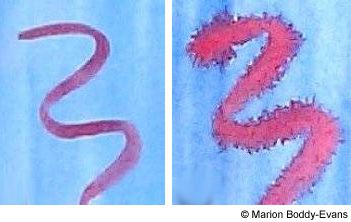
The painting terms wet-on-dry and wet-on-wet do simply mean "wet paint applied onto dry paint" and "wet paint applied onto wet paint." It's important to know you have these two options, or techniques, as laying color on wet or dry paint produces very different effects.
Painting wet-on-dry produces sharp edges to shapes, whereas when painting wet-on-wet, the colors will spread into one another, producing soft edges and blending. Knowledge of this can also help prevent you from being frustrated by the paint not doing what you expect.
To try these essential watercolor techniques, you'll need the following:
If you want sharp edges to what you're painting, then any paint already put down on the paper must be dry before you paint another shape. If it is completely dry, then the shape will stay exactly as you paint it. If it isn't completely dry, the new layer will diffuse into the first (this is done deliberately when you're painting wet-on-wet).
Adding paint to a wet layer of paint on the paper produces a soft, diffused look as the colors mix. The extent to which the two colors mix depends on how wet the first layer still was and how dilute the second color was. You can get anything from a soft-edged shape to a widely spread pattern. In the right-hand example here, the blue was just slightly damp when the red stripe was added, so the red hasn't mixed very far into the blue.
Being able to predict the results you're going to get when working wet-on-wet takes practice, but as this technique can produce spectacular, lively paintings, it's well worth experimenting with it. It's particularly useful for suggesting movement in a painting and for diffusing shapes when you don't want too much detail.
Make up a file of your various attempts with notes on:
A couple of methods to experiment with:
